Alumni Spotlight
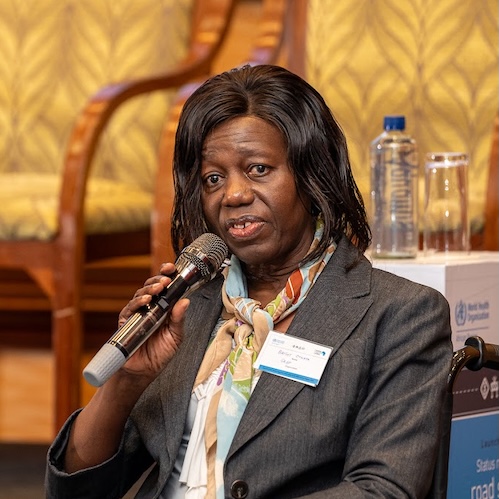
Bright shares her experience of Delft Road Safety Courses
Bright is a highly experienced road safety and disability advocate. She has collaborated with governments, NGOs, private sector and international organizations to develop and advocate for policies and initiatives aimed at reducing traffic road crashes and enhancing disability inclusion.
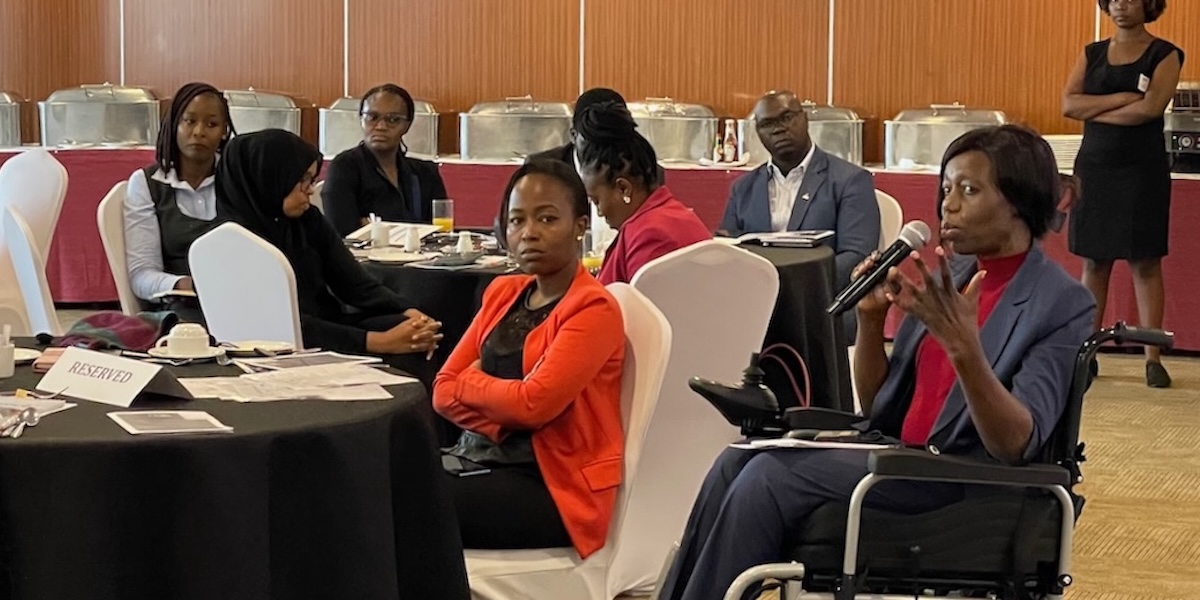
When I began my journey as a road safety advocate, I was fuelled by a deep desire to reduce the alarming number of traffic injuries and fatalities in my community and by a personal tragedy, after a road crash, I was confined to a wheelchair.
In 2011, while working for the Association for Safe International Road Travel (ASIRT), I discovered the Delft Road Safety Course. I applied and was admitted. That was the beginning of a revolution in my approach to road safety.
The course opened my eyes to the science behind road safety, something I had previously taken for granted. I developed an understanding of road safety as a multidisciplinary field, that required a diverse set of strong evidence to inform practical solutions. The course knitted together these disparate elements into an understandable whole. The theory behind the global plan combined with practical training, data-driven interventions and national strategy. With this expertise my advocacy improved, finding that I was able to speak authoritatively about road safety.
I now work as a road safety consultant and advocate. In addition to my work at ASIRT, I have served in the National Road Safety Council and I am currently the Advocacy Coordinator for the Global Road Safety Partnership (Kenya) and I am invited regularly to speak on road safety at international events and meetings – including at the Global Ministerial Conference on Road Safety.
Through DRSC, I moved from an emotional and reactive approach to being strategic and proactive. I started to develop interventions from a foundation of data and measurable objectives, significantly improving the outcomes of my work. For example, in 2012, ASIRT contributed to legislative advocacy of the Midiwo Bill that was merged with the government Bill that produced the Traffic Amendment Bill, 2012 and led to tougher penalties for driving offences. Moreover, in 2013, I was appointed to the inaugural board of the National Transport and Safety Authority (NTSA) where I served as the Vice-Chair until 2019. In this position I was able to use what I had learnt on the course to influence real change in Kenya, by identifying policy gaps and advocating for a review of the existing legislation. This work included improved licencing and testing of vehicles as well as using digital technologies to monitor and regulate the transport sector.
The Delft Road Safety Course also provided me with the opportunity to connect with experts, advocates and practitioners, all engaged in this field. It created a platform for dialogue and collaboration, bringing me into contact with a global movement. With the vibrant alumni network.
The course gave me tools, credibility, and a network. This continues to inform my work to make our roads safer – including our recent success in driving momentum for 30km/h urban speed zones in Kenya. DRSC is more than a course; it is a catalyst for meaningful change.