Annual Delft Road Safety Course
Delft Road Safety Course 2026/27
About the Course
The Annual Delft Road Safety Course for Low and Middle Income Countries is a post-graduate course for professionals working in road safety and related fields in low and middle income countries.
Successful participants will be in a position to influence road safety policy development and implementation, such as engineering, behavioural sciences, academia, public health, law enforcement, transportation/land use planning, statistics, economics, civil society, and public policy.
The 2026-27 course follows a blended two-part approach:
Part 1 provides a solid grounding in the principles and methods needed to effectively address road safety challenges worldwide. Starting in October 2026, it combines live online sessions with self-paced work, bringing together an international group of road safety professionals for an engaging and inspiring learning experience. Participants will explore both road safety theory and its practical application in low- and middle-income country contexts. Topics covered include road infrastructure design, human behaviour, the safety of vulnerable road users, and the role of education, training and enforcement.
Part 2 involves a classroom week in Delft, Netherlands, where participants are given the opportunity to meet some of the world’s leading experts on road safety. Particular emphasis is placed on the Safe System approach and how this can be implemented effectively in low- and middle-income countries.
It is an interactive course with individual and group assignments which must be completed in order to successfully complete the course. A high level of English language proficiency (spoken and written) is essential. Applicants are preferably educated at postgraduate level, but bachelor’s level will be acceptable given sufficient work experience.
Participants who successfully complete the course requirements will earn a Certificate of Completion for both the online and in-person components.
Course details
Applications for the 2026-27 Annual Course are now closed.
- 11 October - 16 December 2026 (Part 1)
- 19 - 23 April 2027 (Part 2)
- Online/ Delft
- 380 (Part 1)
- 3800 (Part 2)
Structure
Part 1
Online learning
Part 2
Classroom week in Delft, Netherlands
Alumni network
Graduates join our vibrant alumni network
Approach
Evidence based
We use methodologies and materials that are evidence-based and scientifically sound – supporting a holistic approach to data collection, problem analysis, research and innovation, monitoring and evaluation.
Leading experts
Our courses are delivered by world leading researchers and professionals with experience of working in and with low and middle income countries to improve road safety and sustainable mobility.
Peer learning
Our learning environment encourages students to exchange knowledge and share experiences. This helps in identifying creative, locally relevant solutions to common challenges and issues.
Tailored for LMICs
We base our learning on the Safe System Approach and how this can be tailored and adapted to local contexts, with a focus on the specific challenges faced by low and middle income countries.
Train the trainer
We support local development and the governance of road safety management by developing capacity amongst practitioners and professionals who will return home and share their learning with others.
What will you learn?
By the end of this course you will:
- Understand the holistic nature of road safety and sustainable mobility
- Understand crash causation from the Safe System perspective
- Understand the characteristics and use of crash data and other road safety data
- Be aware of prominent theories and methods used in road safety research
- Design road safety management strategies and effective countermeasures relevant to low and middle income contexts
- Know how to design and implement a tailor-made road safety action plan
Online component by TU Delft
Delft University of Technology (TU Delft) has been part of the DRSC story since its founding.
The online modules led by DRSC’s world-leading road safety researchers and professionals will be combined with online modules developed by TU Delft’s traffic safety experts in engineering and human factors, providing participants with a solid grounding in the principles and methods needed to effectively address road safety challenges worldwide.
Acceptance onto the DRSC annual course includes automatic enrolment onto the online part delivered by TU Delft. Participants do not need to enrol separately.
Lecturers and Trainers
Course leadership
Mark King
Course co-Leader
Govert Schermers
Course co-Leader
Titia van der Zee
Course registration
Lecturers
Marjan Hagenzieker
TU Delft
Hilda Gomes
Part 1 Lecturer

Antonino Tripodi
Part 1 Lecturer

Haneen Farah
TU Delft
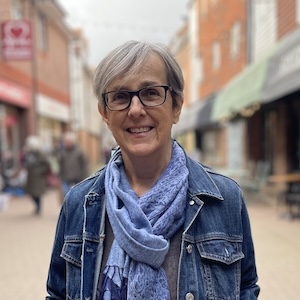
Emma MacLennan
Part 1 Lecturer
Fred Wegman
Part 1 Lecturer

Attila Borsos
Part 1 Lecturer
More course lecturers for Part 2 to be announced shortly.